When the Geography is Difficult to Get To:
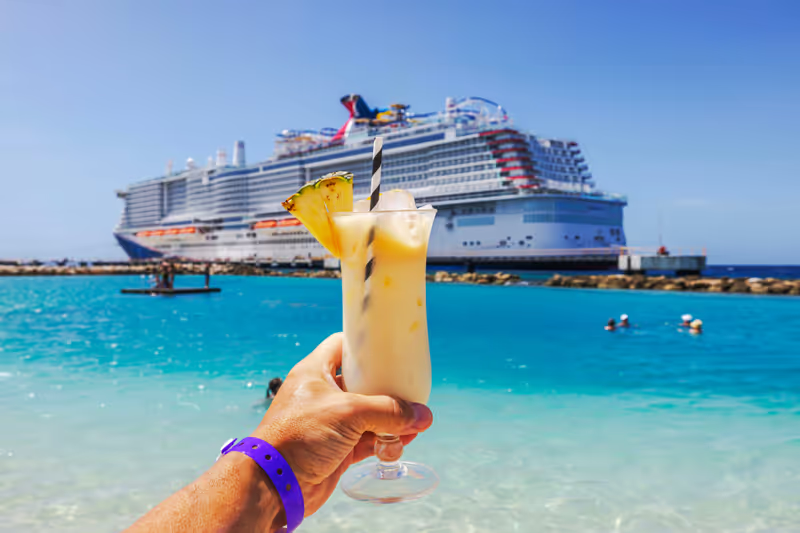
Cruises excel when a destination’s geography is fragmented, say by lots of islands, like the Caribbean or the Norwegian fjords. Because the land is so broken up, it makes land travel difficult, if not impossible. You can’t drive between the islands in Hawaii.
Taking a cruise to these destinations means you only have to pack and unpack your luggage once, instead of each time you need to fly to another island. You don’t have to keep going to the airport and arrive 2-3 hours early to wait through security.
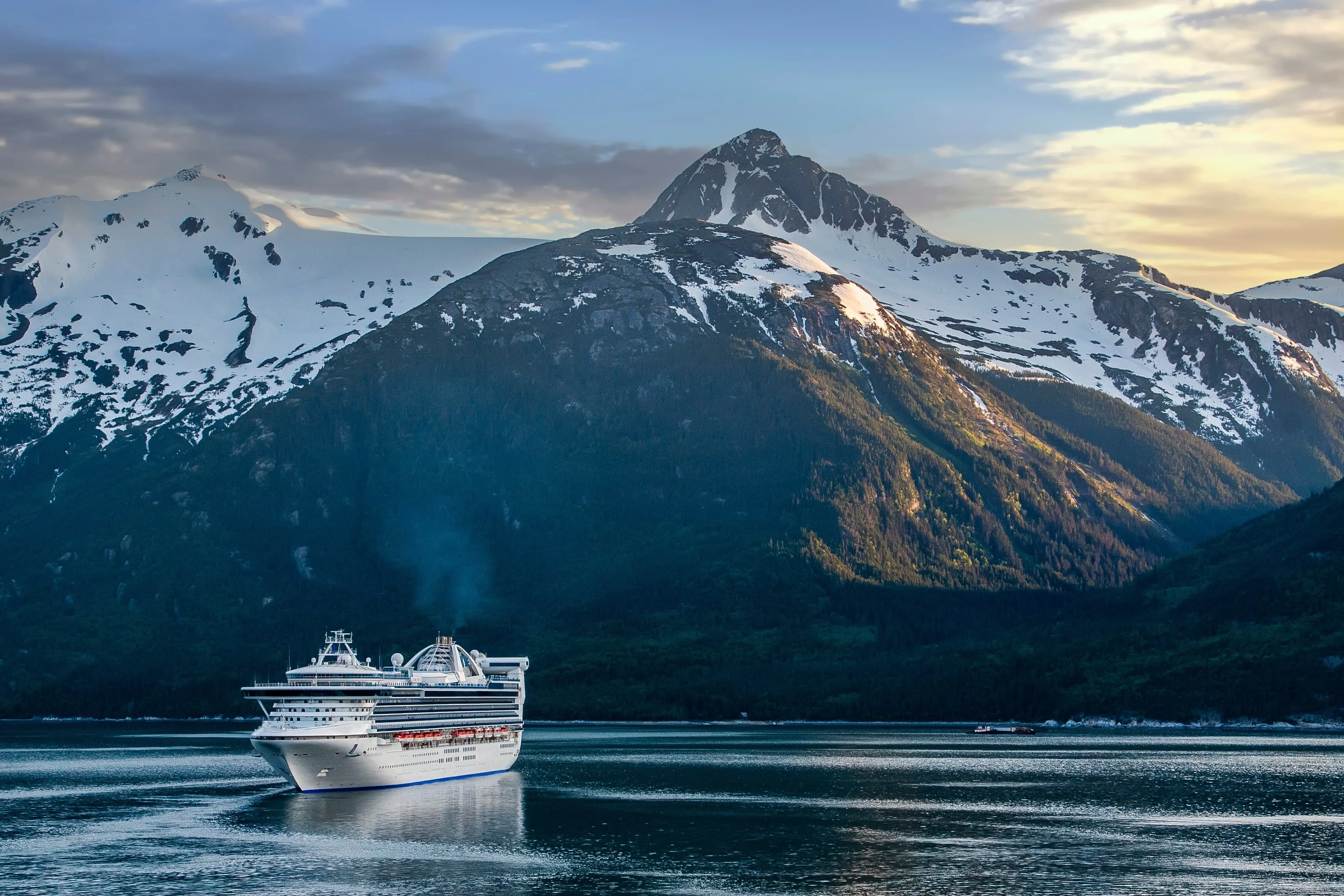
Another logistical reason to take a cruise is if there’s limited to no road access where you’d like to go. Alaska’s Inside Passage has towns that are unreachable by car. But a cruise ship can sail right up to, say, Juneau, Ketchikan, or Skagway.
It’s more exciting to see a massive glacier calve from your room’s balcony over breakfast, than to spend 8 hours on a tourist bus through a bunch of stomach-turning switchbacks.
River cruises are a little different. The Rhine, Danube, and Duoro rivers are dotted with towns that, historically, were built for boat access and not cars. River cruise ships can dock you right in the town center.
A cruise gets you the best of both worlds: Alaskan wilderness all day, a hot shower and gourmet dinner by night.
When Cruises Save You Money:
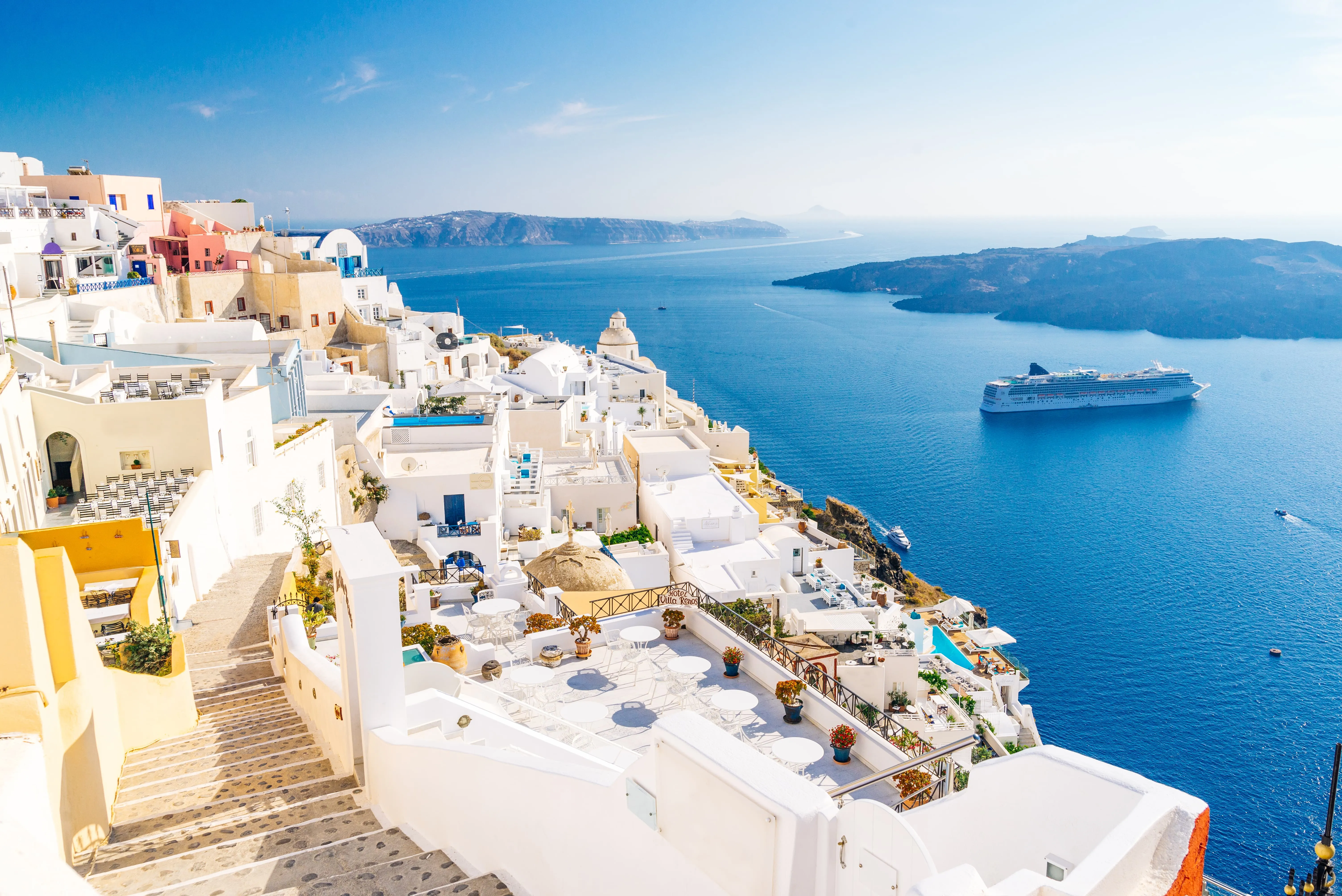
When it comes to cost, taking a cruise is less money spent than with island hopping. Air and hotel alone will cost you 2 to 3 times more than a cruise. Navigating the ferry system in Greece is not easy for a foreigner. The journey from Piraeus (Athens’ port), is 5-8 hours and may stop at 3-5 islands along the way, depending on the route. Cruises mean you just wake up in Santorini.
When Time is Limited:
In 10 days, a Mediterranean cruise hits up Barcelona, Marseille, Florence, Rome, and Naples. By land trip, that means five hotels, five trains, and you spend more of your traveling getting from place to place than experiencing your vacation.
On a cruise you can visit multiple countries, and multiple regions of those countries, and get a taste of what each has to offer. This might be a better option for you if you can’t spend a week in each destination on your bucket list.
When You Want to Enjoy the Journey and the Destination:
The cruise ship itself is a destination where you can try an incredible variety of high-quality foods, see Broadway-caliber shows, and experience endless activities. And best of all, people are there to have a good time. The energy is infectious.
Here’s a list of the best destinations to take a cruise and why:
Bahamas - Hotel options are limited and expensive, a cruise saves you the cost of high resort prices, and takes you to multiple islands, including private cruise line islands
Western Caribbean - In Belize, it’s difficult to reach places you’ve got to see like Roatán, Belize’s Barrier Reef, and Costa Maya. Roatán requires a connecting flight to La Ceiba plus a ferry. A cruise stops at all three locations in one week.
Norwegian Fjords - To see the famous Geirangerfjord by land, you have to drive 6-8 hours on narrow mountain roads. Cruises easily sail right into the fjords.
Alaska - There are no roads to Juneau or Ketchikan. You can view glaciers from your stateroom’s balcony over breakfast and coffee on a cruise ship. Or you can take a shore excursion on a boat and get up close to the glaciers. Not possible with a car.
Mediterranean - The Greek Islands, Croatia’s coast, and Turkey’s ports are connected by often unreliable ferries. You can get cheap flights on budget airlines, but they have strict luggage limits. A cruise can hit up 5 countries without you having to deal with waiting in a long airport security line each time.
Galapagos Islands - The laws around the Galapagos Islands are strict to protect the delicate ecosystem on the islands. Tourism from land requires day boats that run on fixed schedules with limited routes. A cruise is, essentially, the only practical way to see multiple islands.
British Isles - The Scottish Highlands and Ireland’s coast require driving single track lanes, with sheep in the road. If you don’t like sitting in a car for 6 hours, and driving on the left, a cruise is the way to go. You can see Edinburgh, Inverness, and Belfast on a cruise without the driving headaches.
Tahiti/French Polynesia - The flights to different islands in the region are few and expensive. Getting to Bora Bora requires a flight, or a multi-day cargo ship. Some islands, like Rangiroa, have no regular flight service at all. A cruise gets you to these locations easily.
Scandinavia/Baltic - Managing the logistics of exploring Scandinavia requires expensive flights or an 8 hour drive, say, from Copenhagen to Stockholm. A cruise gets you there with a lower cost and saves you the drive.
Eastern Caribbean - Many of the islands look close on a map, but involve multiple ferries and expensive flights to reach. Cruise itineraries often take you to St. Thomas, St. Maarten, and Puerto Rico in one cruise trip.
Hawaiian Islands - Inter-island flights are not so expensive, but rental car shortages happen all the time. A cruise will take you to multiple islands and you won’t have to repack and wait at security several times each time you want to see a new island.
Rhine River - The castles alone the Rhine were built to be viewed by the river. If you take a car, you’ll be on the autobahn. A river cruise takes you to the foot of each castle.
Danube River - Like many river towns in Europe, along the Danube, the towns were built around the river. There are trains, but the cruise brings you right into the city center. From there, you can simply walk into the old town.
Douro River, Portugal - There’s no trains available in the Duoro Valley. There is a road cars can travel but it’s winding and slow to drive. A river cruise is relaxing and you still get to see the terraced vineyards of the valley.
New England/Canada (Fall foliage) - In Fall, if you’d like to see the leaves change color in New England and Canada, there are two lane highways you can drive, but the drives are about 8 hours. A cruise will take you from Boston or New York, to Quebec City during peak foliage week, without the long drive.